Engineering
Secondary Clarification
Solids–liquid separation in the activated sludge process. Critical for effluent quality and sludge return.
Function
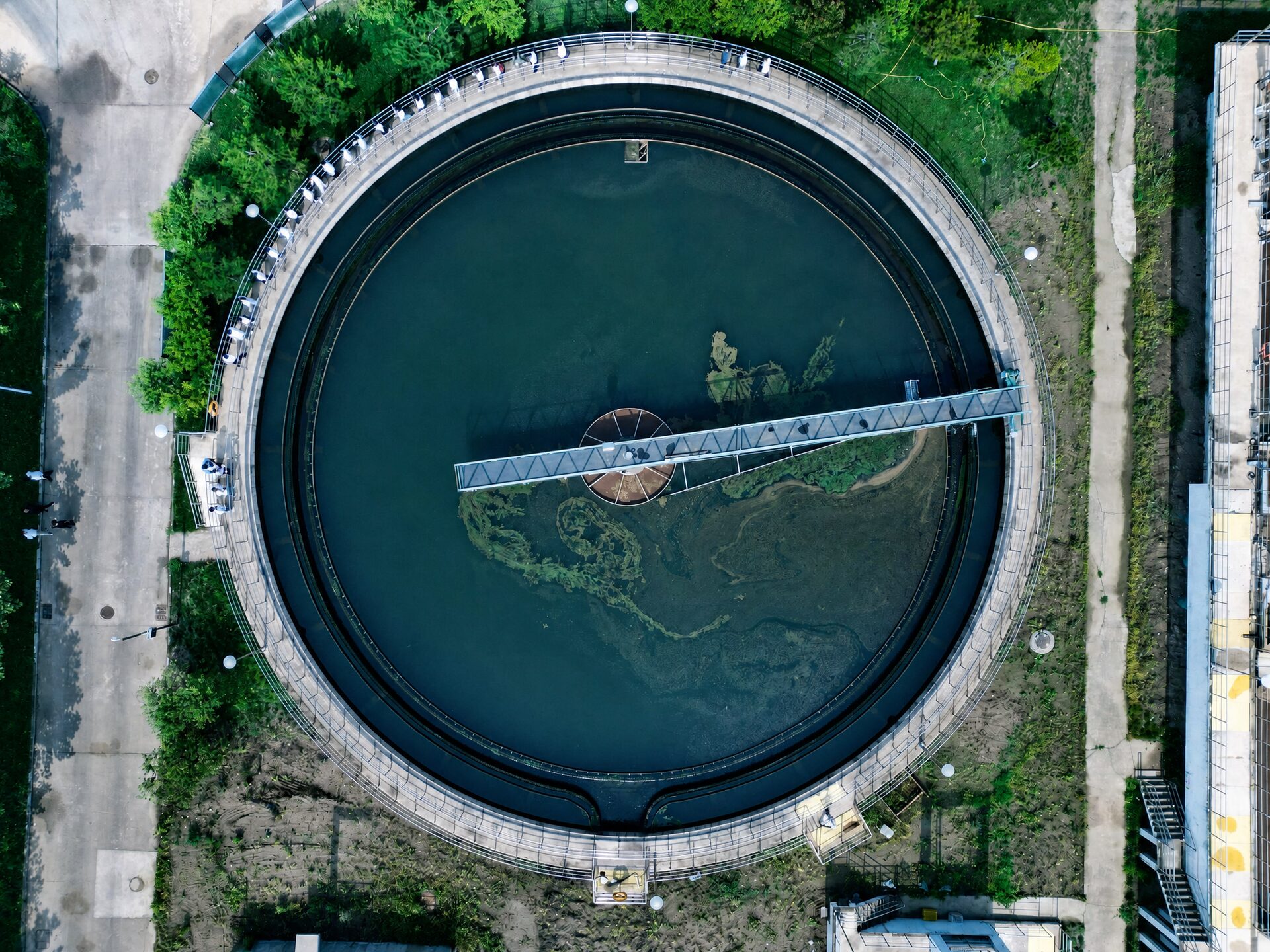
The secondary clarifier (or final settling tank) separates activated sludge from the treated effluent. It performs two critical functions: producing a clear, low-TSS effluent and thickening the return activated sludge (RAS) for recirculation to the aeration basin.
The clarifier is typically the hydraulic bottleneck of the activated sludge process. Its performance depends on sludge settling characteristics (SVI), hydraulic loading, and solids loading rate.
Key Design Parameters
Surface Overflow Rate
At average flow
Solids Loading Rate
At peak conditions
SVI
Good settling sludge
Side Water Depth
Typical range
Clarifier Performance Issues
| Condition | Potential Issue | What to Investigate |
|---|---|---|
| SVI > 200 mL/g | Bulking sludge | Identify filamentous organisms; check DO, F/M, nutrients |
| Rising sludge blanket | Denitrification in clarifier | Reduce sludge detention time, increase RAS rate |
| Pin-point floc in effluent | Dispersed growth | Too high SRT, nutrient deficiency, polymer dosing |
| Solids over weirs | Hydraulic overload | Check SOR at peak flow, verify weir loading rate |
| Uneven sludge blanket | Short-circuiting | Check feed well design, density currents, wind effects |
Engineering Note
Frequently Asked Questions
A secondary clarifier separates the biomass (activated sludge) from the treated water after biological treatment. Clarified effluent flows over the weirs for discharge or further treatment, while settled sludge is collected and returned (RAS) or wasted (WAS).
The clarifier must handle both hydraulic loading and solids loading. If sludge settles poorly (high SVI) or flow peaks exceed the design, solids can carry over into the effluent. That makes clarifier performance a frequent limiting factor for the whole activated sludge process.
SVI (sludge volume index) measures how well activated sludge settles. A high SVI indicates poor settling — often caused by filamentous bulking — which reduces clarifier capacity and can lead to solids washout. Monitoring SVI helps diagnose settling problems early.
Engineering Assessment
Not sure what your plant needs?
Run a Secondary Treatment Engineering Assessment to identify process limitations and develop practical upgrade pathways.
Start Engineering Assessment