Secondary Wastewater Treatment
Engineer Better
Biological Treatment.
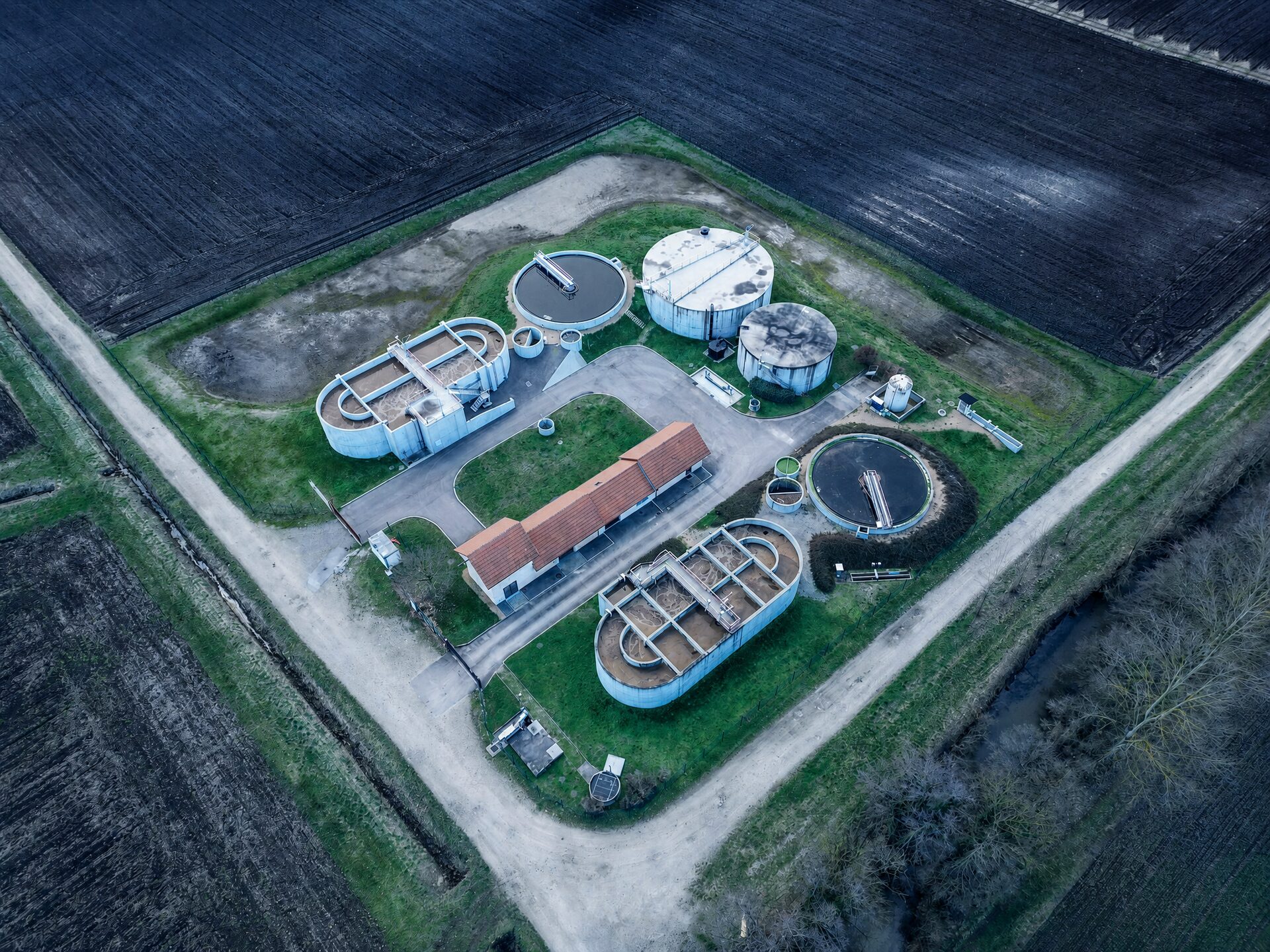
Assess existing plants, identify process limitations and develop practical upgrade pathways for capacity, performance and future requirements.
Diagnostics
What is Your Problem?
Typical Design Parameters
Key Numbers
Design Flow
Typical municipal range
BOD Removal
Conventional activated sludge
Solids Retention Time
Nitrifying activated sludge
MLSS
Typical aeration basin
Regulatory Driver
The EU Urban Wastewater Treatment Directive
Directive (EU) 2024/3019 defines secondary treatment as biological treatment with secondary settling. It extends mandatory secondary treatment to smaller plants and adds an energy-neutrality obligation — the driver behind most capacity and performance upgrades on existing plants.
Source: Directive (EU) 2024/3019 concerning urban wastewater treatment (recast), Annex I.
Process Technologies
Secondary Treatment Processes
Activated Sludge
Conventional suspended-growth process using aeration and secondary clarification. The most widely applied biological treatment system worldwide.
ExploreMBBR
Moving Bed Biofilm Reactor using plastic carrier media for attached-growth treatment. Ideal for retrofit and capacity expansion within existing tank volumes.
ExploreMBR
Membrane Bioreactor combining biological treatment with membrane filtration. Eliminates secondary clarifiers and produces high-quality effluent.
ExploreSBR
Sequencing Batch Reactor operating in fill-and-draw mode. Suited for smaller plants and variable load conditions.
ExploreFrequently Asked Questions
Secondary wastewater treatment is the biological stage that removes dissolved and colloidal organic matter left after primary (mechanical) treatment. Microbial communities break down biodegradable organics and, where required, nutrients such as ammonia and nitrogen. It is the core requirement of the EU Urban Wastewater Treatment Directive for agglomerations above the defined size thresholds.
Primary treatment physically removes settleable solids. Secondary treatment uses biological processes (such as activated sludge, MBBR or MBR) to remove dissolved organic pollution and typically achieves the BOD, COD and TSS reductions required by the directive. Tertiary and quaternary treatment add further steps for nutrient polishing, disinfection or micropollutant removal.
Typical triggers are effluent limit exceedances (for example ammonia or BOD), hydraulic or biological overload, poor sludge settling, tightening discharge requirements, or the expanded scope of Directive (EU) 2024/3019. A structured engineering assessment identifies whether the limitation is hydraulic, biological or clarifier-related before selecting an upgrade pathway.
Common pathways include optimising the existing activated sludge process (aeration, SRT, RAS/WAS control), adding attached-growth capacity with MBBR or IFAS, converting to a membrane bioreactor (MBR) for a smaller footprint, or improving secondary clarification. The right option depends on the specific bottleneck, available footprint and target effluent quality.
Engineering Assessment
Not sure what your plant needs?
Run a Secondary Treatment Engineering Assessment to identify process limitations and develop practical upgrade pathways.
Start Engineering AssessmentWastewater Treatment Network
Engineering the complete wastewater treatment chain.